AI Projects
Tools I built to solve problems I've lived.
I spent 25 years running Customer Success, Revenue Operations, and GTM teams in SaaS. Most of that time I watched the same problems go unsolved, not because nobody noticed them, but because fixing them meant a budget request, a roadmap slot, and two quarters of waiting.
That math changed. These are working prototypes I designed and built myself. Each started as a problem I'd hit personally, and each went from idea to something usable in days.
Sales Methodology Scoring
Methodology Scoring App
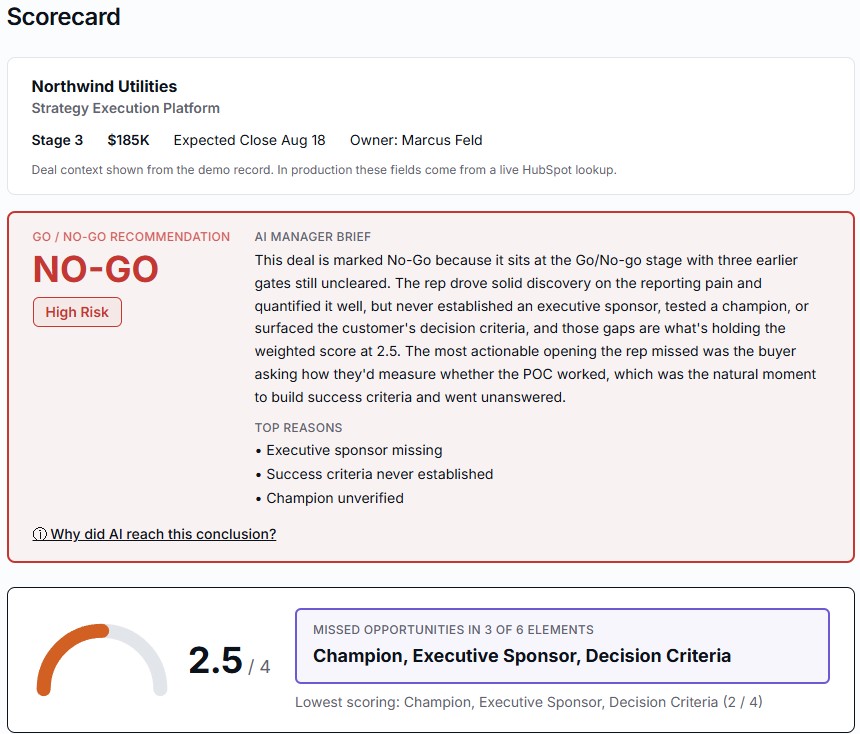
Based largely on best-in-class sales methodology from The Qualified Sales Leader (© 2021 John McMahon), this one scores a call transcript against a MEDDIC rubric, weighting each element by how much it matters at the deal's current stage, and returns a manager-facing scorecard: where the deal actually stands, which qualification gates cleared, and what the rep missed. The score tracks the state of the deal, not the rep, so a hard deal and a weak call read as two different things instead of one blurred number.
Built with Claude Code · Next.js and TypeScript · Claude API · deployed on Vercel
See how it worksStatement of Work Generation
SOW Generator
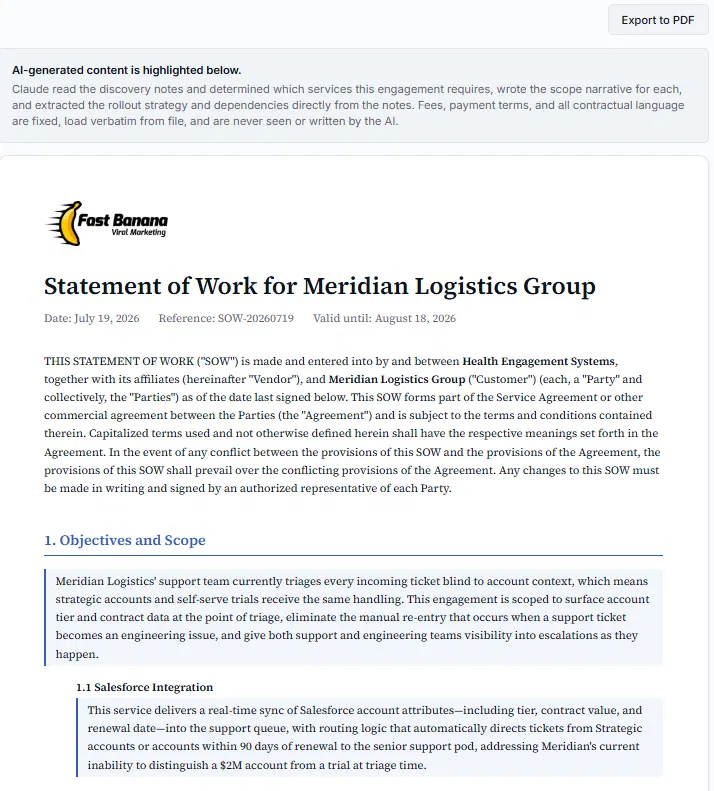
This one reads raw notes or a call transcript from Gong, Zoom, or Meet, and produces a finished SOW. Every section the AI wrote is marked on screen, so you can see what the model contributed and check it before anything reaches a client.
Built with Claude Code · Next.js and TypeScript · Claude API · deployed on Vercel
See how it worksNDR / GDR Diagnostics
CARRavan
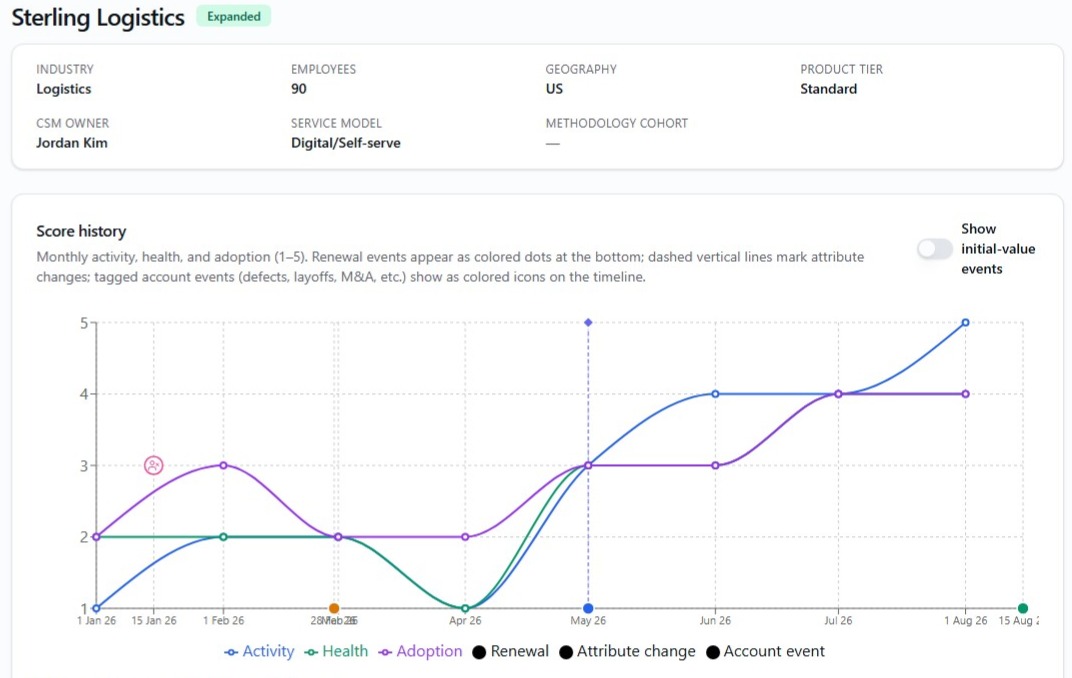
Most SaaS leaders can recite their NDR number. Few can explain why it moved. The data that would answer it sits across exports nobody fully trusts, and the platforms that fix that assume a clean stack most mid-market companies don't have.
CARRavan takes CSVs and shows where retention is leaking. It supports both calendar-year and rolling-twelve-month methodology, since both are legitimate and the right one depends on what you're measuring, and it won't offer rolling-twelve until there are twelve months of data behind it. Where scores and outcomes move together, it says so and stops there.
Built with Lovable · React and TypeScript · Supabase · live read-only demo
See how it worksThe work behind the tools
These came out of running the function, not studying it. The case studies cover that side.